
What are Roof Bars on vans?
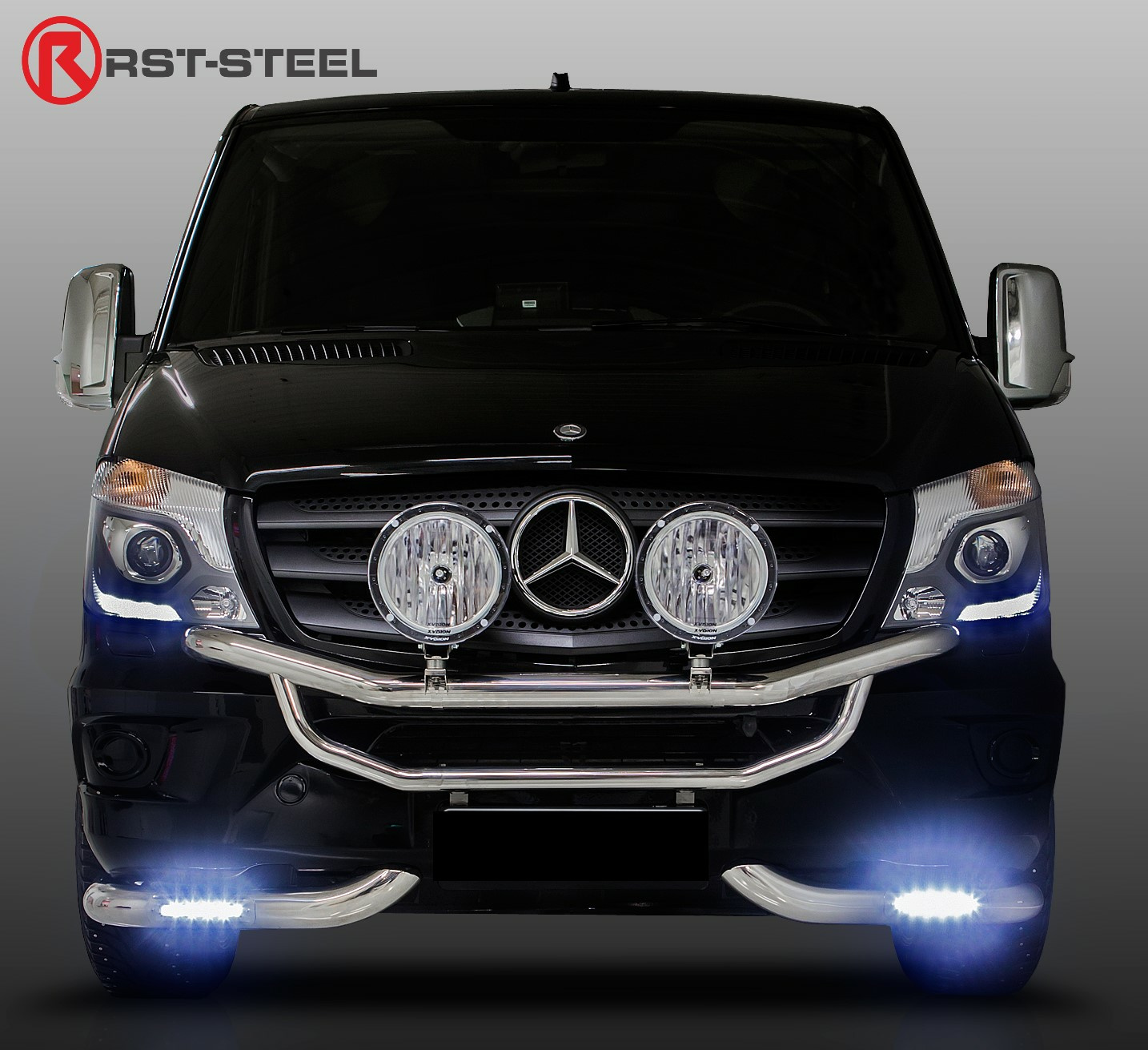
Van roof bars are structural accessories mounted across the roofline of a van, typically manufactured from stainless steel, that serve as a fixed mounting platform for auxiliary lights, position lights, and other van equipment. They also sharpen the vehicle’s visual profile. This article covers the types available, how to choose the right one, what you can mount on them, and what fitting involves.
What are roof bars on vans and what are they used for?
Van roof bars are rigid, horizontal bars fitted across the roof of a van using purpose-made mounting brackets. Made primarily from high-grade stainless steel, they perform two clear functions: they enhance the vehicle’s appearance by following the natural lines of the cabin, and they provide a solid, load-bearing platform for accessories such as auxiliary driving lights and position lights.
For professional drivers, the practical function matters most. A roof bar gives you a stable, elevated mounting point for lighting that improves visibility in low-light conditions, poor weather, or demanding work environments. Unlike improvised solutions, a properly fitted stainless steel roof bar integrates cleanly with the vehicle and holds accessories securely regardless of road conditions.
What types of roof bars are available for vans and how do they differ?
The two main categories are standard roof bars for conventional-height vans and high-roof-van-specific designs that accommodate the taller roofline profile. Beyond that, differences come down to bar diameter, cross-section profile, bracket geometry, and model-specific fitment. These variables directly affect structural rigidity, accessory compatibility, and how cleanly the bar sits on the vehicle.
Bar diameter influences both strength and the range of mounting clamps you can use. A wider-profile bar suits heavier auxiliary light setups, while a slimmer profile works well when aesthetics are the priority. Bracket design is equally important: model-specific brackets ensure correct alignment and prevent stress on the roof panel, which matters particularly when the vehicle is loaded or driven on rough terrain.
How do you choose the right roof bar for your van?
Start with your van’s make, model, and roof type. A bar designed for a standard-roof Transit will not align correctly on a high-roof variant. Beyond fitment, evaluate material grade and corrosion resistance, particularly if the vehicle operates in Nordic or coastal conditions where road salt and moisture accelerate surface degradation on lower-grade materials.
Consider what you plan to mount. If you intend to fit LAZER auxiliary lights or similar high-output units, confirm that the bar’s load rating and mounting clamp compatibility support that hardware. Position lights add minimal weight but require clean wiring access points. Choosing a roof bar with pre-considered accessory compatibility saves significant time and avoids retrofitting problems later.
What accessories can be mounted on van roof bars?
The most common accessories are auxiliary driving lights, work lights, position lights, and full light bars. Each has different mounting hardware requirements. Auxiliary lights typically use adjustable clamp brackets that grip the bar diameter, while position lights often integrate directly into the bar or attach via compact fixed mounts.
Wiring routing deserves attention before any accessory is fitted. Clean cable management means routing wires through grommeted entry points in the roof rather than running them externally, which protects against chafing and water ingress. Properly selected accessories on a quality van roof bar meaningfully improve operational safety, particularly for drivers covering long distances in darkness or adverse weather.
How are roof bars installed on a van and what should you know before fitting them?
Installation begins with verifying bracket alignment against the specific roof profile of your van model. Brackets must sit flush without rocking, as uneven contact concentrates stress and can damage the roof over time. All mounting points should be sealed with an appropriate waterproofing compound to prevent water tracking into the roof structure. Torque values specified by the manufacturer must be followed precisely.
In Finland and across the Nordic region, modifications to a vehicle’s structure or lighting configuration may carry type-approval implications. It is worth confirming that your chosen roof bar and any lights fitted to it comply with applicable regulations before the vehicle returns to road use. Professional fitting removes this uncertainty and ensures the installation is done correctly from the start.
If you are looking for stainless steel roof bars built specifically for professional van use, RST-Steel manufactures and supplies a range covering the most common van models, with a full installation service available across Finland. Kontakta oss to discuss the right solution for your vehicle and intended accessories.


 Swedish
  English
  Norwegian